“A Royal City and a Poets’ Haven,
a thousand-year love song by an ancient river.”
City Introduction:
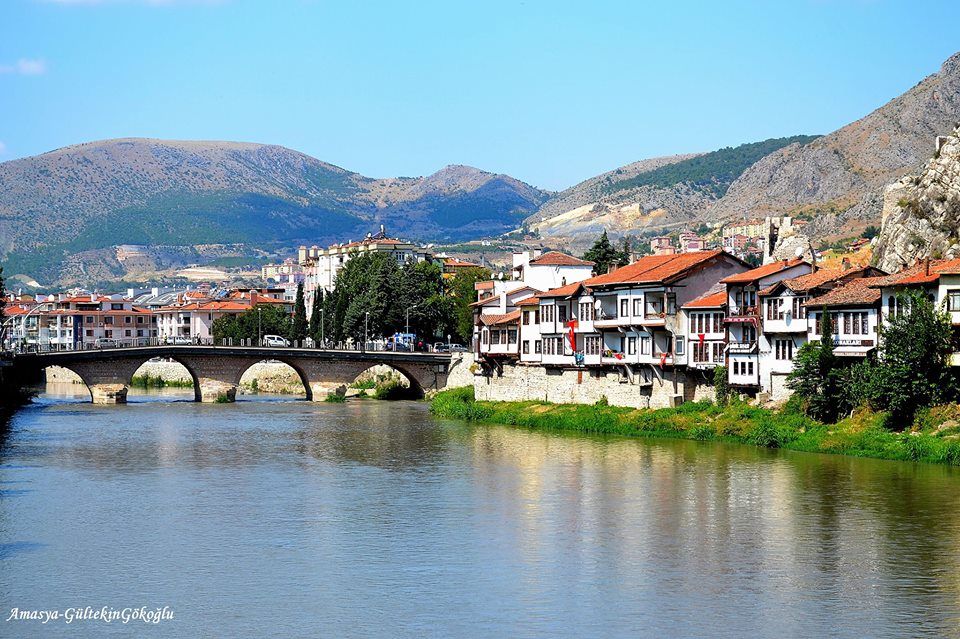
Amasya is located in an inland valley of Turkey’s Black Sea region, stretching along both banks of the Yeşilırmak River. It is one of the oldest cities in Anatolia and has long been a strategic center for the Hittite, Persian, Roman, Byzantine, Seljuk, and Ottoman civilizations.
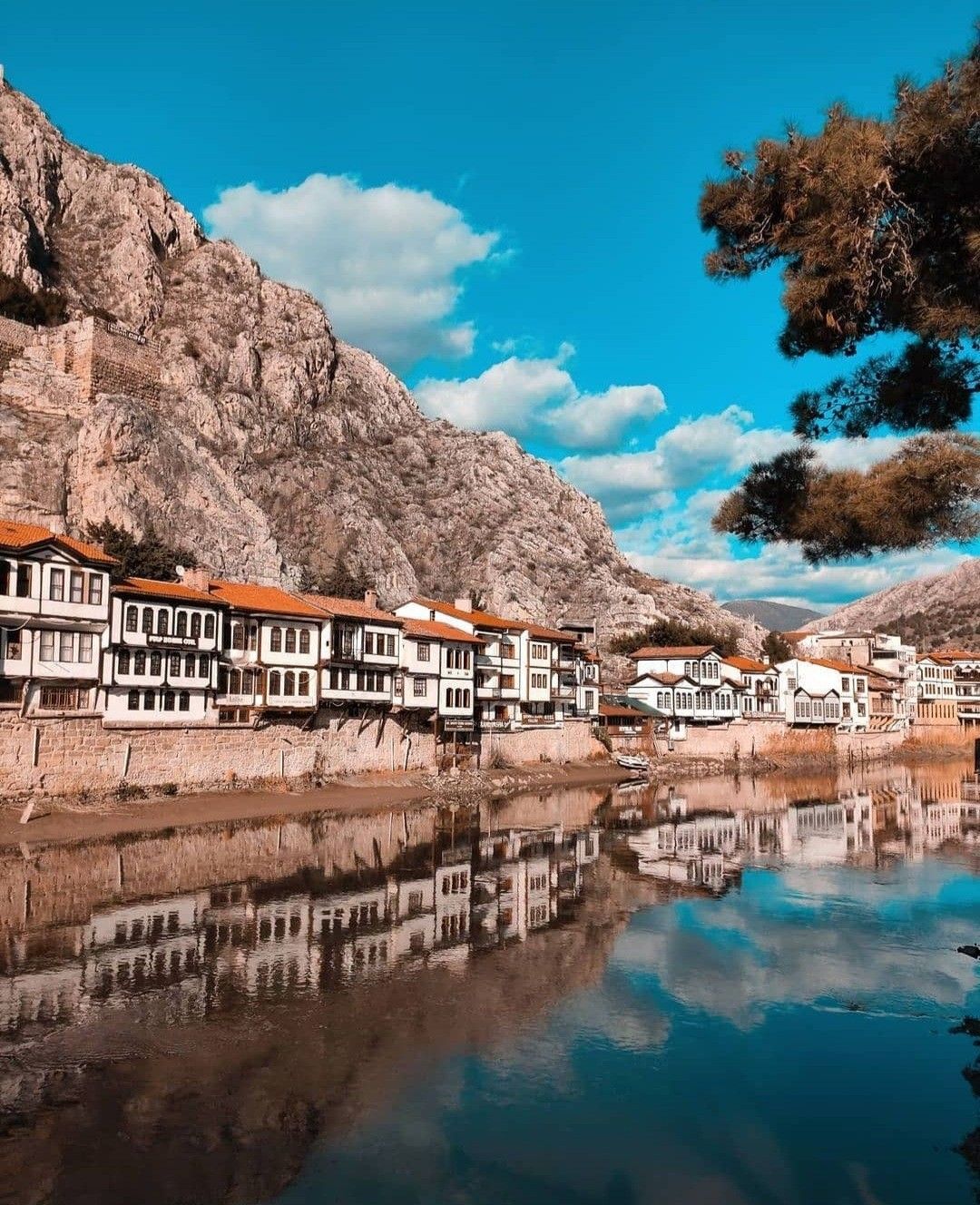
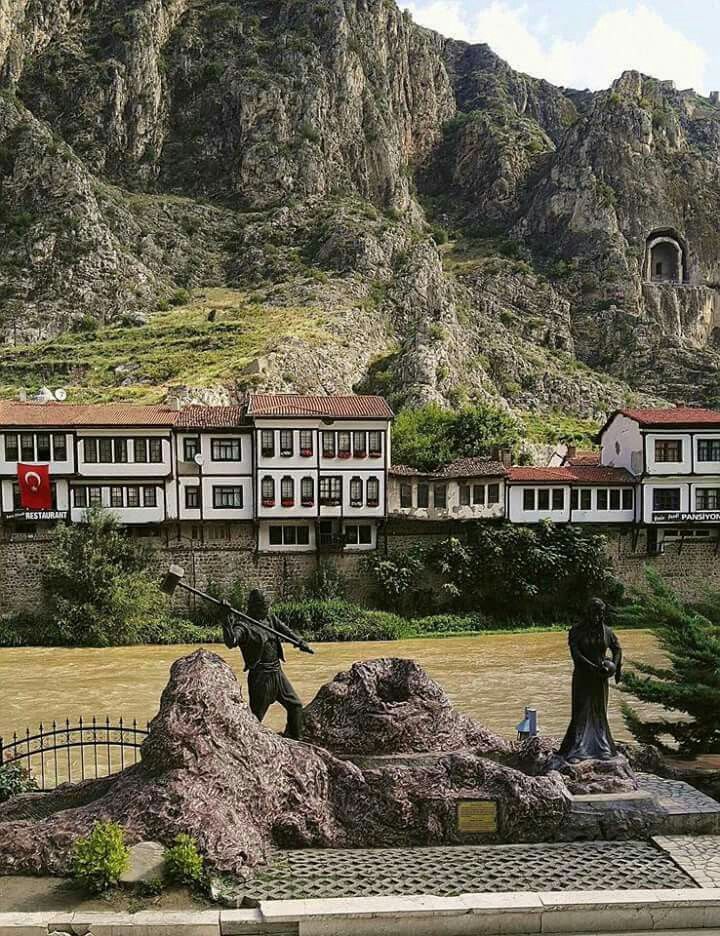
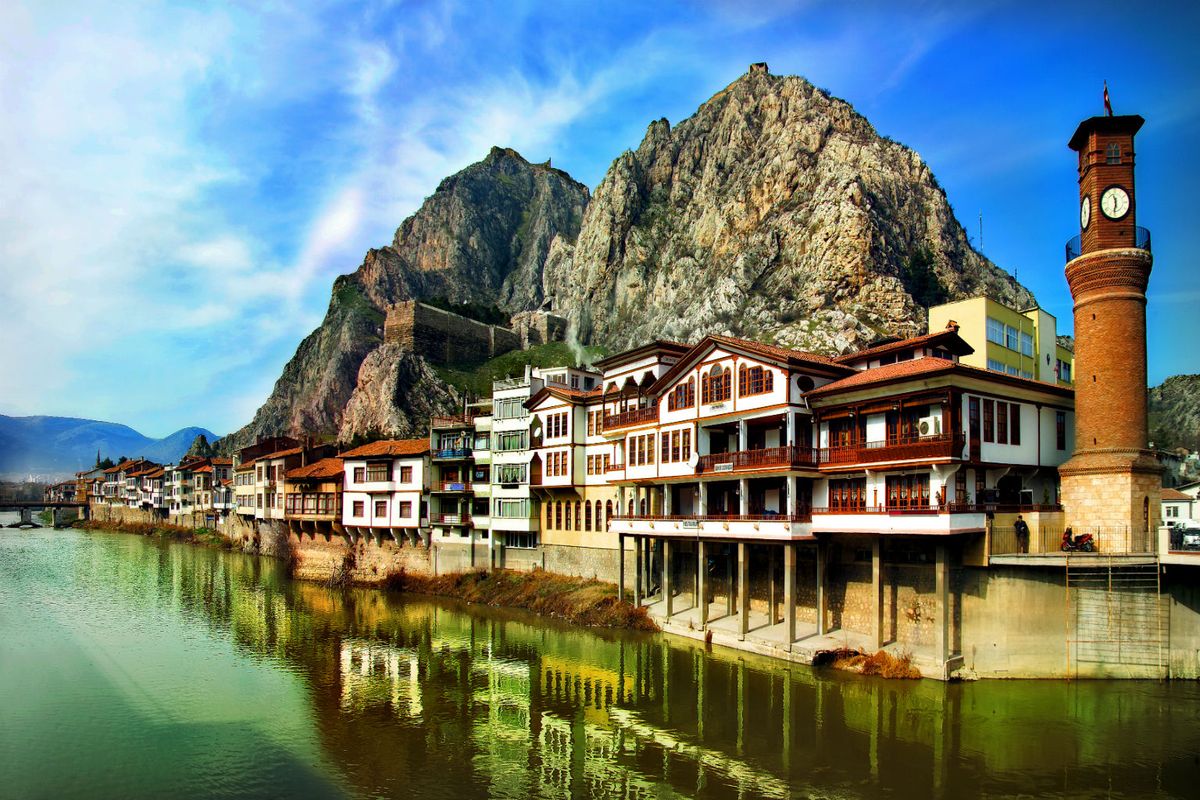
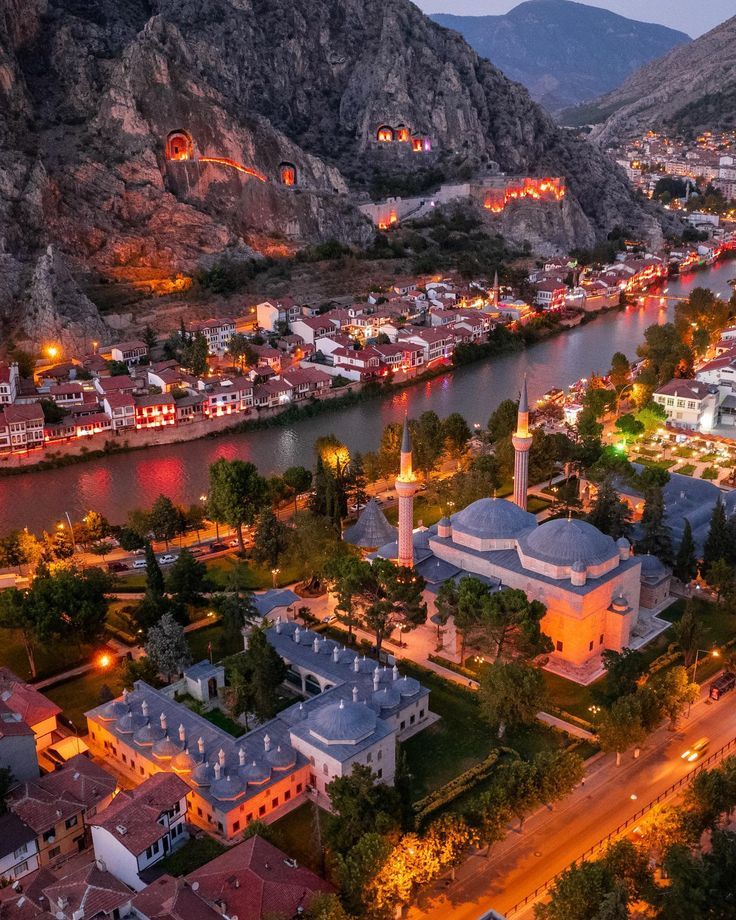
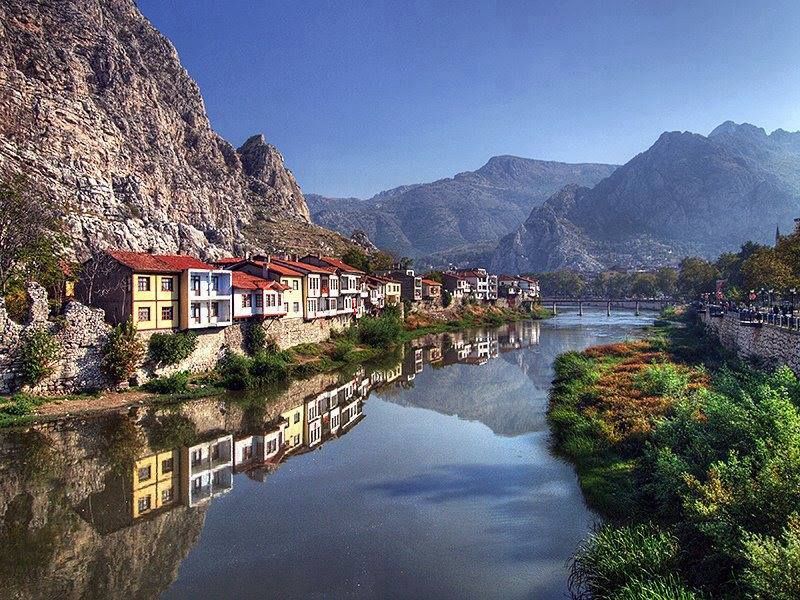
Historically, Amasya was the capital of the ancient Kingdom of Pontus and later became known as the “City of Princes,” where Ottoman princes were educated and trained in governance before ascending the throne. Its dramatic setting—mountains embracing the river, Ottoman houses lining the waterfront, and royal tombs carved into sheer cliffs—creates the city’s unforgettable character.
Top Attractions:
Pontic Kings Rock Tombs
Carved high into the cliffs overlooking the Yeşilırmak River, these monumental tombs date back to the 3rd century BCE and belong to the kings of the Kingdom of Pontus. The rectangular entrances lead into spacious chambers once used for royal burials.
Legend has it that King Mithridates VI ordered these tombs built and hid vast treasures of gold within the mountains to protect them from Persian and Roman enemies. To this day, locals speak of “royal gold hidden in the mountain’s eyes,” a tale that has drawn countless treasure seekers over the centuries.
🏠 Ottoman Riverside Houses (Yalıboyu Houses)
The iconic white-walled, timber-framed houses along the river form Amasya’s most recognizable scenery. Built mainly in the 18th–19th centuries, these homes once belonged to merchants and officials, with upper floors extending over the river and reflecting beautifully on the water.
One notable example, the Hazeranlar Mansion, has been converted into a museum displaying Ottoman-era furniture, clothing, and daily household items.
Beyazid II Mosque and Complex (Külliye)
Commissioned in the 15th century by Sultan Beyazid II, this mosque complex served as a major religious and educational center. According to local belief, the stone fountain in the courtyard ripples mysteriously during Quran recitations and is revered as “miraculous water.”
Amasya Circular (Tamimi) Museum
In 1919, Mustafa Kemal Atatürk issued the Amasya Circular here, declaring the principle of national independence—an event regarded as the starting point of Turkey’s War of Independence. The museum preserves the original meeting room and historical documents from that pivotal moment.