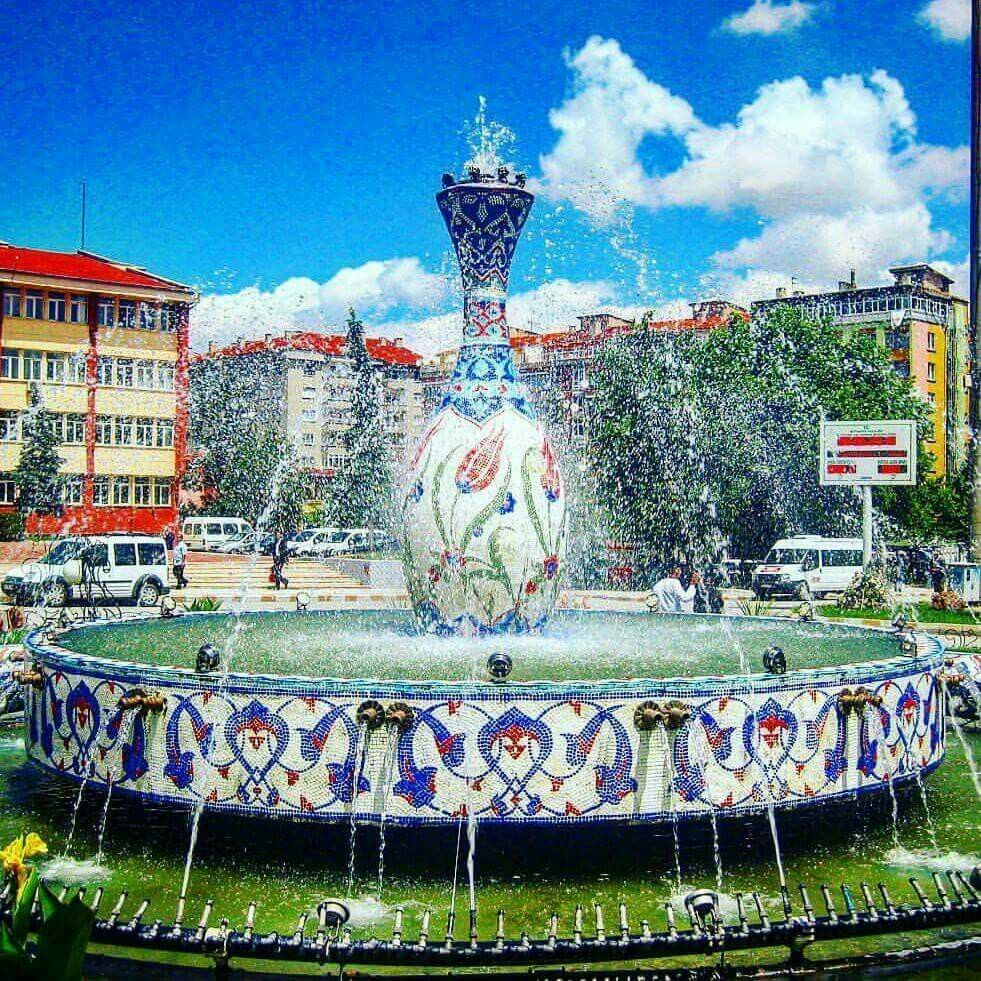
“Blue porcelain descends upon the mortal world in one city,
Half a scroll of Ottoman history unfolds within.”
City Introduction:
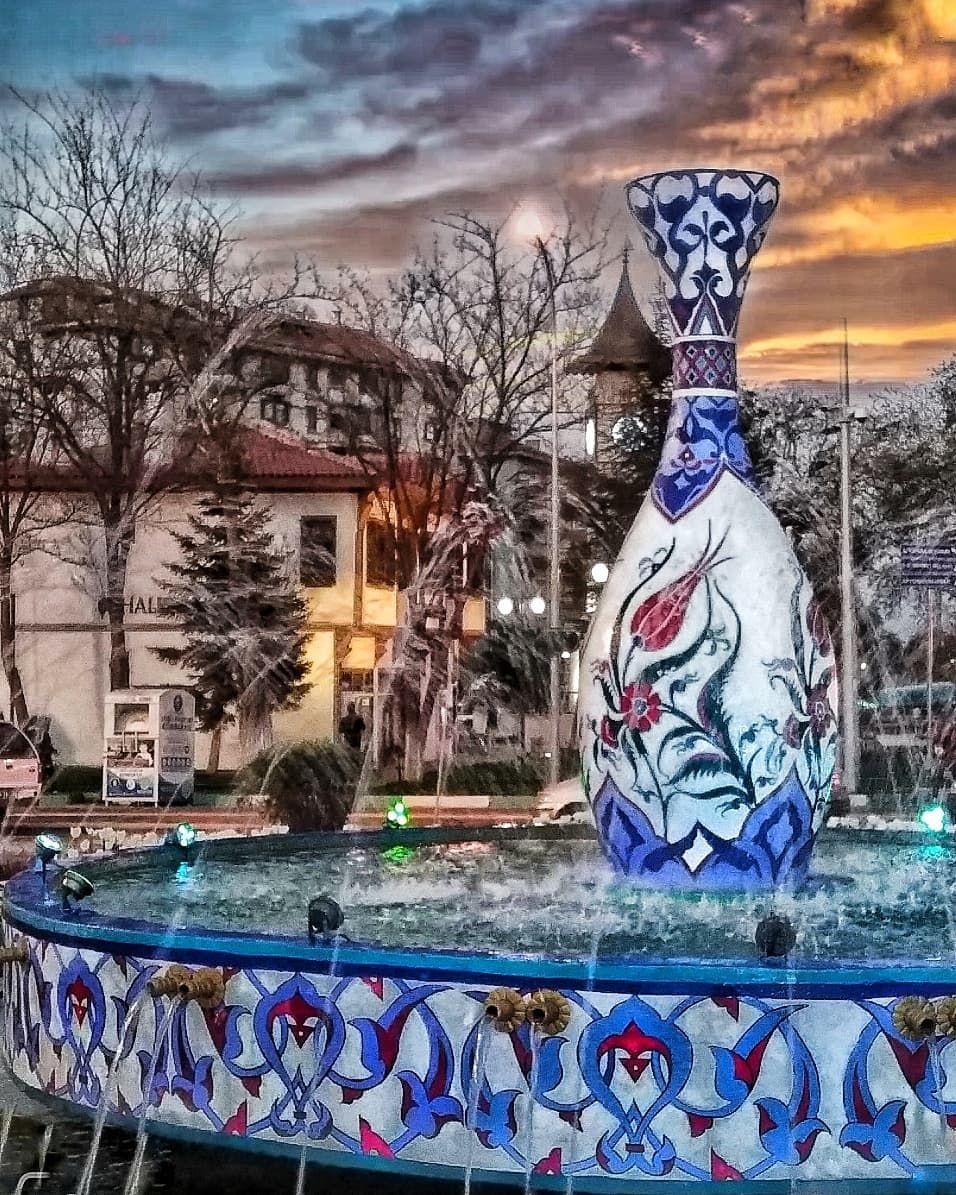
Kütahya is located in west-central Türkiye and was one of the most important ceramic art centers during the Ottoman period. Renowned for its exquisite blue-and-white ceramics (Çini), it is often called “the Jingdezhen of Türkiye.”
Throughout history, the city was ruled in turn by the Hittites, Phrygians, Romans, Byzantines, and Ottomans, creating a richly layered cultural heritage. Beyond its ceramic tradition, Kütahya is also a city where religion, folklore, and literature intertwine. Wrapped in Sufi culture, ancient battle history, and geothermal springs, it unfolds like a vividly colored Anatolian tapestry.
Top Attractions:
Kütahya Çini Museum
Housed inside a 17th-century madrasa (Islamic theological school), this is one of the few museums in the world dedicated specifically to Islamic ceramic art. The collection features blue-and-white porcelain, decorative tiles, and ceramic fragments adorned with Islamic calligraphy dating back to the 16th century. The colors are rich, the patterns intricate, and the aesthetics deeply Ottoman.
It is said that one of the favorite cups of an Ottoman sultan was produced in Kütahya, decorated with tulips and nightingales symbolizing blessing and protection, and used during Eid and New Year ceremonies.
Ulu Cami, Kütahya
Built in 1381, this Grand Mosque is one of Kütahya’s most significant religious landmarks. Commissioned by one of the rulers of the Germiyanid principality, it features a wooden roof and interior walls adorned with ceramic tiles and Arabic calligraphy, blending early Ottoman and Seljuk styles.
On one exterior wall, a carved poem is said to have been left by a heartbroken craftsman. Though weathered by time, a line can still be discerned:
“Clay is like love — it does not burn away, yet it shatters my heart.”
Aizanoi Ancient City
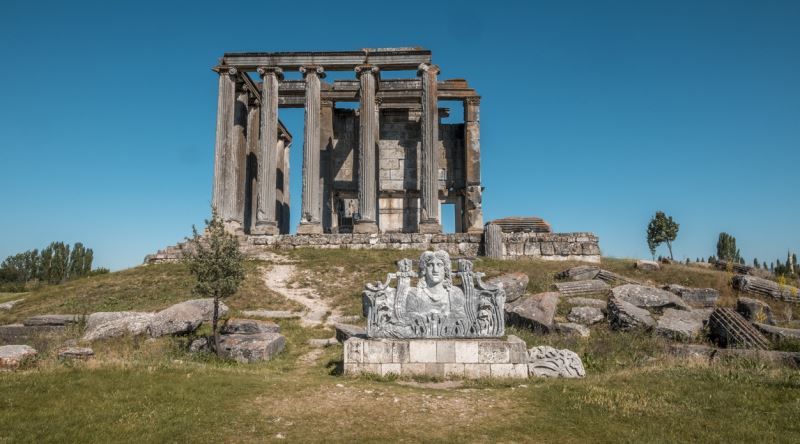
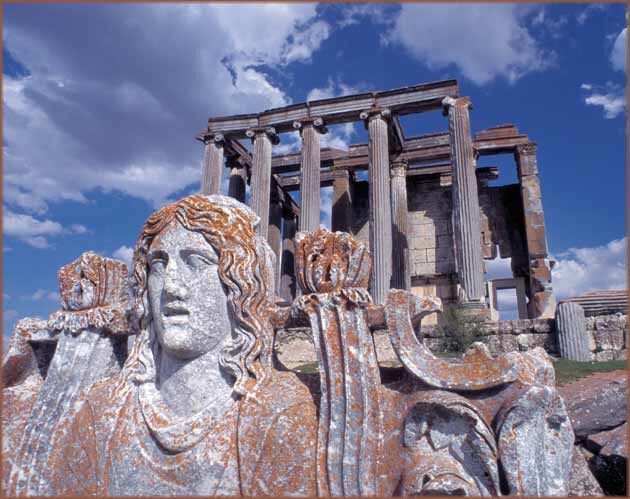
Located in the village of Çavdarhisar within Kütahya Province, Aizanoi was once one of the capitals of Roman Phrygia. It preserves one of the best-maintained Temples of Zeus in the ancient world.
The temple stands majestically in the middle of a grassy plain, with an underground cryptoporticus once used for ritual ceremonies. Nearby lies a rare architectural complex combining a theater and stadium — an exceptional example of Roman urban design.
Legend has it that this land was once a sacred site of love between Zeus, god of thunder, and Demeter, goddess of harvest. A water channel in front of the temple was said to be used for “love divination”: if a young woman cast flower petals into the stream and they flowed smoothly with the current, marriage would soon follow.