“The gentle rhythm of the Aegean Sea caresses an ancient harbor—
where classical temples stand side by side with luxurious cruise ships.”
City Introduction:
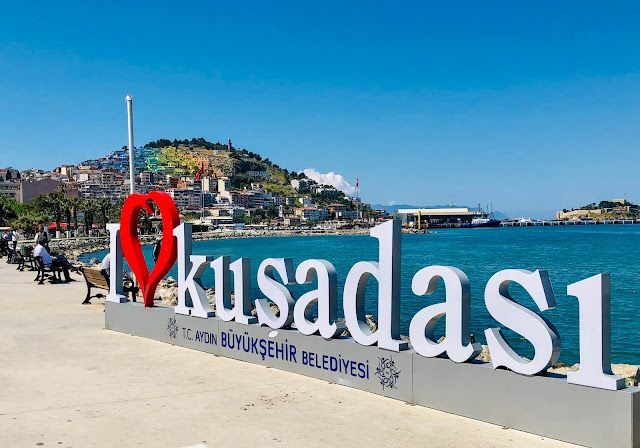
Kuşadası is located on Turkey’s western coast and is one of the most important cruise ports on the eastern Aegean Sea. Its name means “Island of Birds,” derived from the small offshore island known as Pigeon Island.
Since antiquity, Kuşadası has served as the maritime gateway to the ancient city of Ephesus and a vital link connecting Ancient Greece, Rome, the Ottoman Empire, and modern tourism. Today, Kuşadası is a unique blend of seaside resort and cultural stronghold, bringing together luxury hotels, turquoise beaches, lively bazaars, and world-class archaeological sites. It appeals equally to lovers of sun and sea as well as passionate history enthusiasts.
Top Attractions:
Pigeon Island (Güvercinada) & Byzantine Fortress
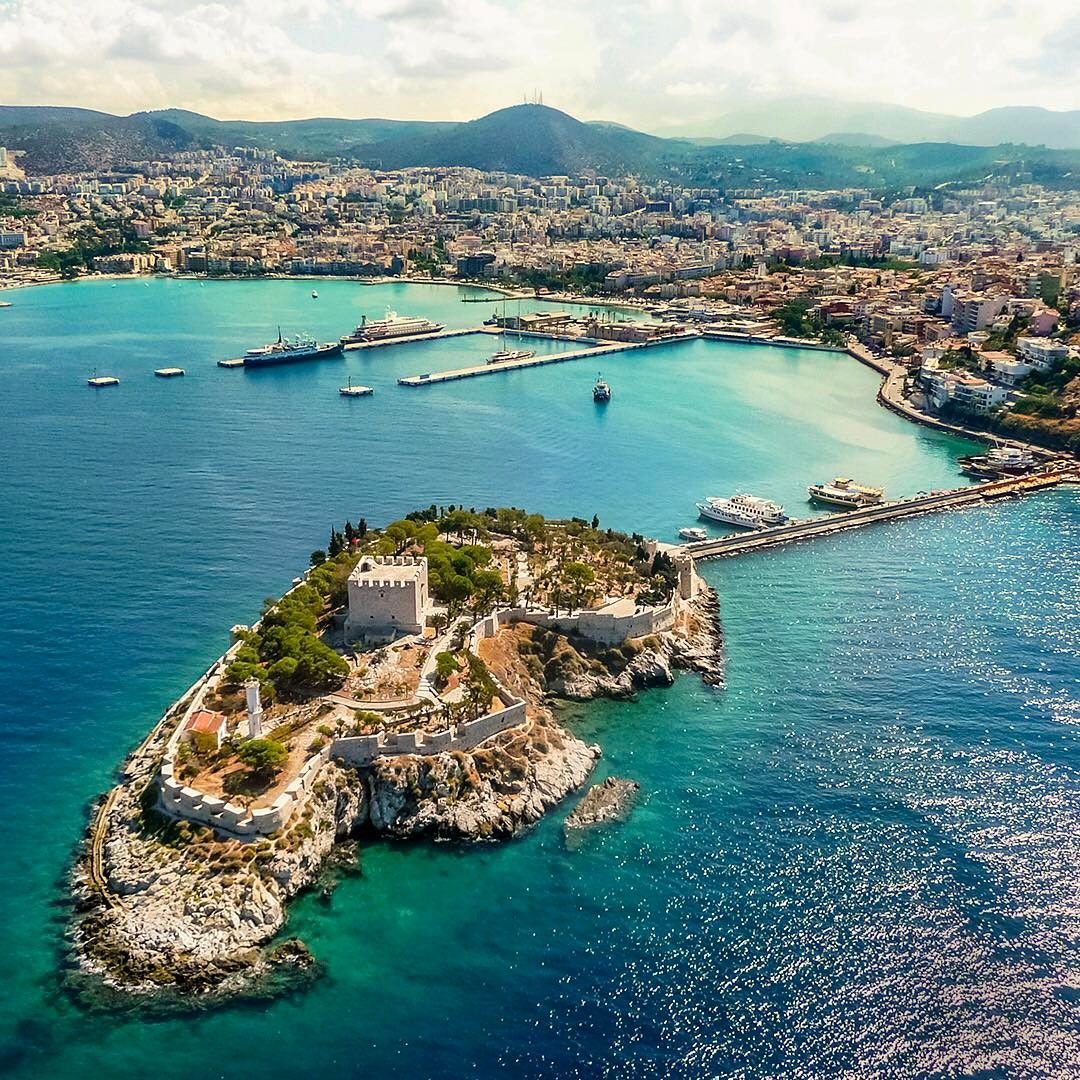
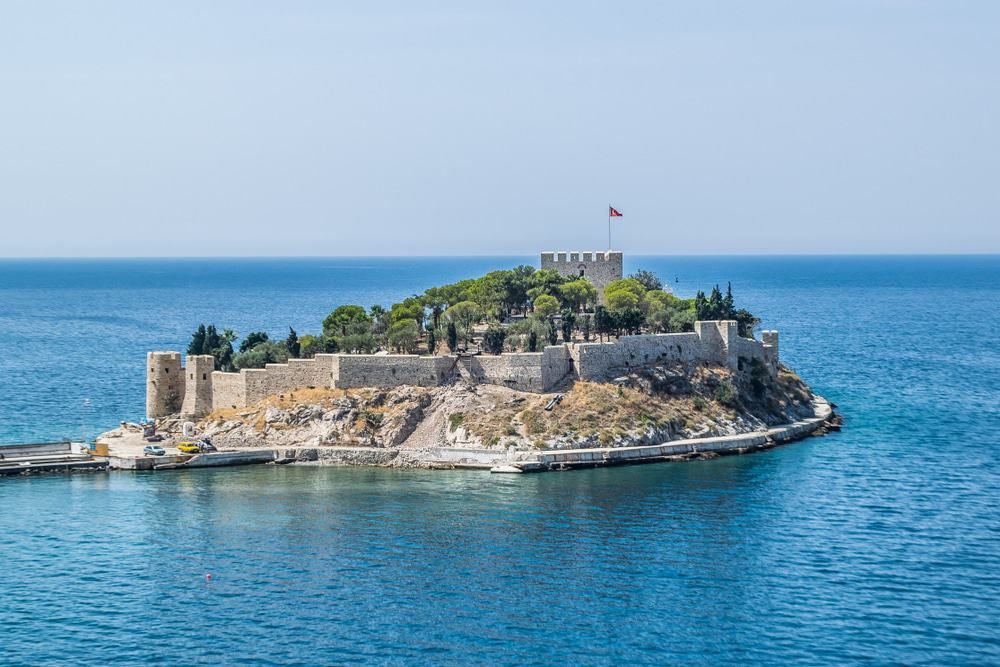
Located directly across from the city harbor and connected to the mainland by a causeway, Pigeon Island is the visual symbol of Kuşadası. The island is home to a 15th-century Byzantine coastal fortress, later expanded by the legendary Ottoman admiral Barbaros Hayreddin Pasha to defend against Aegean pirates.
The rugged stone walls, watchtowers, and torch platforms give the fortress a powerful presence. At sunset, the island resembles a stone ship anchored in the sea. Today, the island features cafés and walking paths and is one of the best spots to enjoy sunsets and evening views.
Ephesus Ancient City (Approx. 20 km outside the city)
The ancient city of Ephesus (Efes/Ephesus) is located near the town of Selçuk in İzmir Province, just a few kilometers from the Aegean Sea. It was once one of the most prosperous commercial and religious centers of the ancient Greek world and later the capital of the Roman province of Asia.At its peak in the 1st century AD, Ephesus had a population of approximately 250,000, making it one of the largest cities in the ancient world.
Ephesus is not only the site of one of the Seven Wonders of the Ancient World—the Temple of Artemis, but also an important stage in early Christian history, associated with figures such as the Virgin Mary, Saint Paul, and Saint John. Today, it is one of the best-preserved and most impressive classical archaeological sites in Turkey and is listed as a UNESCO World Heritage Site.
Key Sites and Their Stories:
Library of Celsus
One of the most iconic structures of Ephesus, the Library of Celsus was built in AD 110 by the son of Tiberius Julius Celsus to honor his father. The two-story marble façade features statues symbolizing Wisdom (Sophia), Knowledge (Episteme), Virtue (Arete), and Reason (Ennoia).
The building served not only as a center of learning but also as Celsus’s tomb—his sarcophagus lies beneath the library floor, making it a rare example in the Roman world of a burial placed inside a public library.
Great Theatre
Originally constructed during the Greek period and later expanded by the Romans, the Great Theatre could seat approximately 25,000 spectators. It was used for performances, political gatherings, and religious ceremonies.
📖 According to the Acts of the Apostles, Saint Paul once faced a violent public protest here when his preaching was seen as a threat to the worship of Artemis, causing widespread unrest. Standing in the theater today, one can almost hear the echoes of ancient debates and turmoil.
Temple of Hadrian
Built in the 2nd century AD in honor of Emperor Hadrian, this elegant temple features richly carved reliefs above its entrance. The reliefs depict the founding myth of Ephesus: Prince Androclus, guided by prophecy, establishes the city after killing a wild boar—symbolizing the city’s divine origins.
Though modest in size, the temple is an outstanding example of Ephesian architectural artistry and symbolic storytelling.
Temple of Artemis (Remains)
Constructed around 550 BC, the Temple of Artemis was one of the Seven Wonders of the Ancient World, surpassing even the Parthenon in size and splendor. Artemis, goddess of hunting and fertility, was the protector deity of Ephesus.
Although only a few columns and scattered stones remain today, visitors continue to come in awe, drawn by the lingering presence of what was once described as “a miracle illuminated by the night sky.”
Scholastica Baths & Public Latrines
These structures offer insight into the social organization and daily life of the ancient city. The public latrines are arranged in a curved formation with flowing water beneath the seats, and the walls bear poems and satirical inscriptions—earning them the nickname “the social media of the classical world.”
The bath complex included hot and cold pools, massage rooms, and exercise areas, serving as places for hygiene, social interaction, and relaxation.
Marble Road & Curetes Street (Lovers’ Road)
These main thoroughfares connected the theater, library, council hall, and marketplaces. Along the streets once stood temples, fountains, noble residences, and shops.
📖 Legend has it that Curetes Street earned its romantic nickname because noblewomen and common youths once met here in secret, swearing eternal love under the gaze of the moon goddess Selene. Today, it remains one of the most popular spots for couples’ photographs.
Christian Heritage & Legends
House of the Virgin Mary: Located in the hills above Ephesus, it is believed that Mary lived here under the care of Saint John after the crucifixion of Jesus. The site is now an important pilgrimage destination, drawing visitors from around the world to light candles and pray.
Basilica of St. John: Built in the 6th century to honor the Apostle John, it is believed that his remains are buried beneath the church. The impressive ruins still convey the former grandeur of this sacred site.
Living Legacy
Ephesus is not a “dead city.” Each year, concerts, light shows, and archaeological festivals bring new life to the ancient ruins, transforming them into contemporary cultural spaces. One highlight is the “Classical Moonlight Concert” held in front of the Library of Celsus, where musicians from around the world perform amid illuminated ancient stones.
Kuşadası Marina & Promenade
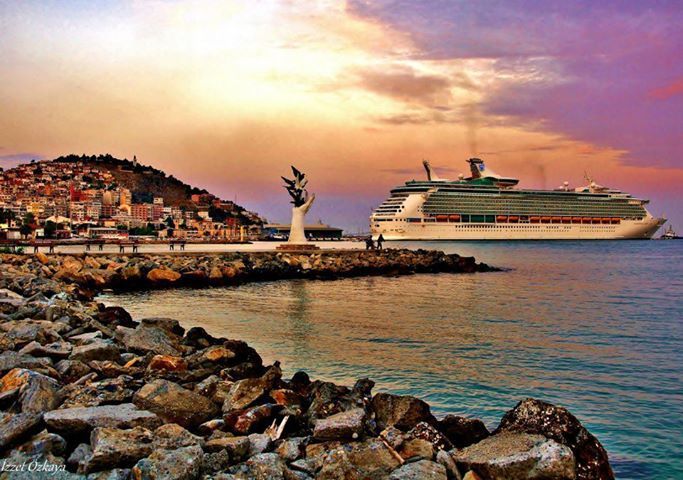
The port of Kuşadası is one of Turkey’s busiest cruise terminals, welcoming nearly one million visitors annually. Strolling along the seaside promenade, ancient fortresses and mosque silhouettes rise on one side, while blue waters and moored yachts stretch out on the other. At night, the harbor lights shimmer alongside the illuminated Pigeon Island lighthouse, creating one of the most gentle and romantic nightscapes of the İzmir Gulf.